Area Overview for Malvern Hills District
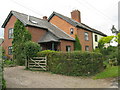
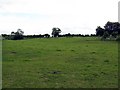
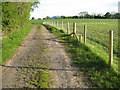
Photos of Malvern Hills District
Area Information
Living in Malvern Hills District offers a stark contrast to typical urban life, shaped by a landscape dominated by the Malvern Hills ridge. This administrative district covers 577.5 square kilometres of western England, centred near Great Malvern. The chief town sits at the heart of this unitary authority, defined by a north-south trending ridge that rises to 425 metres at Worcestershire Beacon. You will find yourself navigating open grassland, woodland, and scrub across the district, rather than navigating city streets. The area forms part of the Malvern Hills National Landscape, blending pastoral farmland with ancient geological features. British Camp, an Iron Age hill fort, remains visible near the A449, while historic mineral springs have long influenced local development. The terrain presents both allure and practical considerations for prospective residents. The ridge contrasts with the eastern lowlands drained by the River Severn, offering dramatic views over the Severn Valley and the Cotswolds. You have access to 100 miles of footpaths for walking and cycling, set against a backdrop of dramatic scenery. Great Malvern serves as the primary market and cultural centre within this jurisdiction. While the area provides a rural character, it is almost entirely within historic Worcestershire, with a small section extending into Herefordshire. This setting defines the daily experience for everyone from local commuters to those seeking a retreat from metropolitan pace.
- Area Type
- District/Borough
- Area Size
- 577.5 km²
- Population
- Not available
- Population Density
- Not available
Demographics
The community profile in Malvern Hills District reflects a population with an unusually mature age structure. The median age stands at 70 years, significantly higher than national averages. This data indicates that the most common age range across the district centres on older residents. Consequently, daily life focuses heavily on retirement needs, quiet neighbourhoods, and established routines rather than youth culture or₂college town dynamics. Home ownership is exceptionally high, reaching 72% of all households. This figure strongly suggests that the housing stock is overwhelmingly owned outright, reducing vacancy rates and rental turnover. You will find that accommodation types align with this demographic reality, offering stability rather than transience. The high rate of ownership typically correlates with families moving to the area during later life stages. While the data does not specify household composition in detail, the 72% ownership rate is a definitive metric for the local market character. This environment creates a settled community where long-term residents dominate the social fabric. You are likely to engage with neighbours who have remained in their homes for decades. The district functions as a primary residence area rather than a secondary holiday location, fostering a tight-knit social network. The sheer size of the age cohort nearing 70 ensures the area maintains a consistent, mature population without frequent residents coming and going in large waves.
Household Size
Accommodation Type
Tenure
Ethnic Group
Religion
Household Composition
Age
Household Deprivation
NS-SEC
Explore more demographic insights in this area
Go to Demographics tabPlanning
Planning Constraints
- Flood RiskPremium
- Ramsar Wetland SitesPremium
- Area of Outstanding Natural BeautyPremium
- Protected Nature ReservePremium
- Protected WoodlandPremium
- Crime RiskPremium