Area Overview for Cowbridge with Llanblethian Community
Photos of Cowbridge with Llanblethian Community
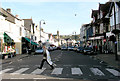
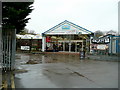
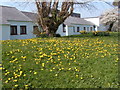
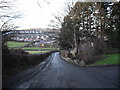
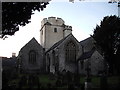
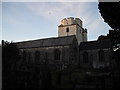
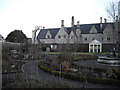
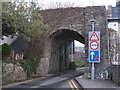
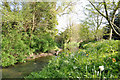

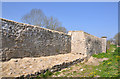
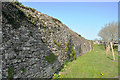
Area Information
Cowbridge with Llanblethian Community stands as one of Wales's oldest and most significant small historic towns. This civil parish covers 11.1 km² and centres on the market town of Cowbridge alongside the adjoining village of Llanblethian. The area originated from Roman times, featuring a planned 13th-century walled borough layout with burgage plots that remains visible today. Although it was designated as a conservation area in 1970 due to its architectural interest, the physical character dates back to a charter granted by Richard de Clare in 1254. Walls were built around the town circa 1266, and the core retains a strong historic feel from its medieval origins and 18th-century coaching architecture. Key landmarks include the extant South Gate and the High Street with its historic frontages. You live in an environment defined by layered archaeological and architectural interest rather than modern sprawl. The topography slopes towards the River Thaw, creating a distinct setting within the Vale of Glamorgan. Living here means engaging with a space where the planned 13th-century layout coexists with Roman-era foundations from the Via Julia Maritima. This location offers a historical narrative rooted in the Norman invasion era and the St Quentins family, alongside later developments like Llanblethian Castle which commenced in 1307. The area's identity is firmly tied to its status as a historic entity rather than a contemporary shopping hub.
- Area Type
- Parish
- Area Size
- 11.1 km²
- Population
- Not available
- Population Density
- Not available
Demographics
The demographic profile of Cowbridge with Llanblethian Community reflects a distinctly mature community. The median age sits at 70, indicating a population heavily weighted towards older residents. You will find that the majority of the population falls within the general age total category, suggesting a lack of significant young adult clusters. Home ownership stands at a high 81%, establishing the local housing stock as primarily owner-occupied rather than rental-driven. This high rate of ownership suggests stability and long-term residency within the parish. The data does not specify a predominant ethnic group or religious affiliation, meaning the community composition remains undefined in terms of specific diversity metrics. Household composition and accommodation type details are also not broken out in the available records. Consequently, the picture that emerges is one of an ageing, predominantly owner-occupied settlement where residents have likely spent considerable time in their current homes. The absence of granular data on household types prevents a detailed analysis of family structures, but the high ownership percentage is a clear, quantifiable indicator of the neighbourhood's character. For buyers, this context suggests a market where properties change hands less frequently and are often passed down or held for long durations.
Household Size
Accommodation Type
Tenure
Ethnic Group
Religion
Household Composition
Age
Household Deprivation
NS-SEC
Explore more demographic insights in this area
Go to Demographics tabPlanning
Planning Constraints
- Flood RiskPremium
- Ramsar Wetland SitesPremium
- Area of Outstanding Natural BeautyPremium
- Protected Nature ReservePremium
- Protected WoodlandPremium
- Crime RiskPremium