Area Overview for Aberaman North Community
Photos of Aberaman North Community
Area Information
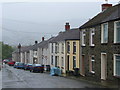
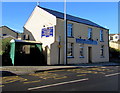
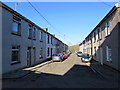
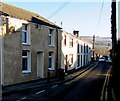
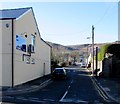
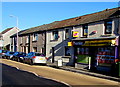
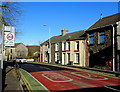
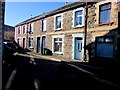
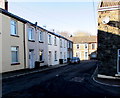
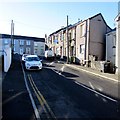
Living in Aberaman North Community offers a grounded experience within a civil parish that spans 4.3 square kilometres. Located in Rhondda Cynon Taf, this area sits to the south of Aberdare deep in the Cynon Valley. The village developed rapidly during the second half of the nineteenth century as a ribbon settlement spreading southwards from Aberdare along Cardiff Road. Streets such as Curre Street, Holford Street, Gwawr Street and Lewis Street appeared in the 1850s to accommodate the wave of industrial workers. The community is defined by its nineteenth-century terraced housing, which reflects its history as a coal and iron mining town. You will find the iconic Aberaman Hall and Institute standing as a significant landmark, having been opened by Keir Hardie MP in June 1909. This building served as a central pillar of civic pride for over a century before a fire destroyed it in November 1994. Today, the area carries the weight of its industrial past while maintaining a residential character. The population consists of approximately 2,389 people, providing a small-scale neighbourhood feel. On the morning of 1 December 2016, the former community of Aberaman was administratively split into two new communities. This administrative change created the current boundaries for Aberaman North and Aberaman South. You can expect a lifestyle rooted in family history and local heritage rather than modern urban development. The area offers a quiet retreat for those seeking homes with deep historical significance in South Wales.
- Area Type
- Parish
- Area Size
- 4.3 km²
- Population
- Not available
- Population Density
- Not available
Demographics
The community within Aberaman North Community displays a distinct age profile with a median age of 70 years. This statistic indicates that the population is heavily skewed towards older residents, suggesting a neighbourhood where retirement homes are common. While the raw data lists 'Age: Total' as the most common age range, the central tendency strongly implies a mature demographic. Approximately 60 percent of households in Aberaman North own their homes. This high ownership rate suggests a stable establishment of families and long-term residents rather than a transient population driven by rental markets. The remaining 40 percent likely include private tenants or those renting from housing associations. There is no data available regarding the specific breakdown of household composition or accommodation types beyond the aggregate figure. Similarly, details on the predominant ethnic group and religious affiliation are not provided in the current records. Despite the lack of granular data on diversity, the area's history as an industrial settlement suggests a traditional community structure. The absence of young families in the statistical profile means you should anticipate a quieter environment with less school-running traffic in some streets. Living here means engaging with residents who have deep roots in the Cynon Valley and have witnessed the area's transition from heavy industry to its current state.
Household Size
Accommodation Type
Tenure
Ethnic Group
Religion
Household Composition
Age
Household Deprivation
NS-SEC
Explore more demographic insights in this area
Go to Demographics tabPlanning
Planning Constraints
- Flood RiskPremium
- Ramsar Wetland SitesPremium
- Area of Outstanding Natural BeautyPremium
- Protected Nature ReservePremium
- Protected WoodlandPremium
- Crime RiskPremium