Area Overview for Pillgwenlly Community
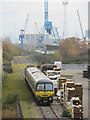
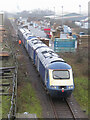
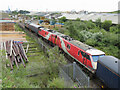
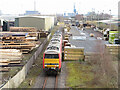
Photos of Pillgwenlly Community
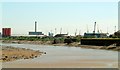
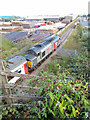
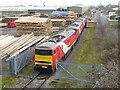
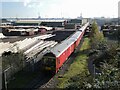
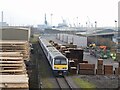
Area Information
Living in Pillgwenlly Community places you within a civil parish covering 6.2 km² in the Welsh countryside. The population stands at 1913, resulting in a density of 307 people per km². This figure suggests a setting that feels spacious yet remains sufficiently inhabited for local services. You are buying into an established rural environment where the built-up area contrasts with surrounding open land. Daily life here revolves around the quiet rhythm of the valley rather than city noise. The location offers a distinct break from urban density while maintaining connection to regional networks. The parish functions as a cohesive entity where residents interact with a stable community structure. You will find that the small footprint allows for easy access to local landmarks and shared spaces. The area defines itself through its topography and its specific status as a parish in Wales. Prospective buyers should note that the total number of residents creates a close-knit atmosphere without the congestion of larger towns. Your view from a new home likely ranges over open fields or village greens, typical of this size and location. The community balances isolation with accessibility, a trait common to parishes of this demographic weight.
- Area Type
- Parish
- Area Size
- 6.2 km²
- Population
- 1913
- Population Density
- 307 people/km²
Demographics
The demographic profile in Pillgwenlly Community indicates a mature population. The median age is 70, meaning the typical resident is significantly older than the national average. Data shows the most common age range covers the entire spectrum, yet the high median points to a prevalence of retirees. House ownership sits at 49%, which implies a roughly even split between owner-occupiers and non-owned housing units. You should expect a market where secondary buyers and landlords hold significant sway alongside the older owner-base. Accommodation type data reflects this mixed ownership structure. Around half the households possess their homes, while the remainder likely rely on renting or shared living arrangements. This 49% ownership rate suggests a diverse housing stock rather than a uniform market. The household composition varies, accommodating single individuals, couples, and families despite the high median age. You will not find a crowded young professional demographic here; instead, the area hosts those seeking retirement or a low-stress lifestyle. The population density of 307 people per km² supports a range of local needs without overwhelming infrastructure. This demographic reality means fewer changes in leadership or community initiative compared to younger areas.
Household Size
Accommodation Type
Tenure
Ethnic Group
Religion
Household Composition
Age
Household Deprivation
NS-SEC
Explore more demographic insights in this area
Go to Demographics tabPlanning
Planning Constraints
- Flood RiskPremium
- Area of Outstanding Natural BeautyPremium
- Protected Nature ReservePremium
- Protected WoodlandPremium
- Crime RiskPremium