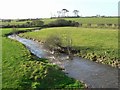
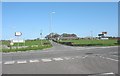
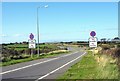
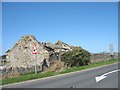
Looking towards the remains of Holyrood Church, Ceirchiog. in Bryngwran Community
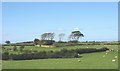
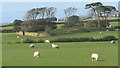
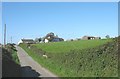
View across farmland towards the churchyard of Ceirchiog Church in Bryngwran Community
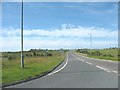
The A4080 from the A5 in Bryngwran Community
The B 5112 at the junction with the A5 in Bryngwran Community
Treban Crossroads on the A5 in Bryngwran Community
Betws y Grog (Holy Rood Church) Ceirchiog in Bryngwran Community
Remains of Betws y Grog (Holy Rood Church) Ceirchiog in Bryngwran Community
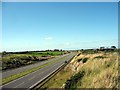
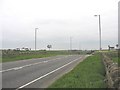
The A55 westwards of Engedi bridge in Bryngwran Community
Slip road leading down to the A55 in Bryngwran Community
Roofless barn between Engedi and Bwlcyn Farm in Bryngwran Community
Dip in the road east of Ty Newydd Farm in Bryngwran Community
The Ceirchiog Crossroads in Bryngwran Community
50 photos from this area

Area Information

Bryngwran Community is a civil parish located in Wales, covering a defined geographical expanse of 16.9 km². Living in Bryngwran Community means settling into an area where residents have personal familiarity with the local landscape and history. The parish functions as a distinct administrative unit within the wider Welsh context, offering a specific sense of place for those seeking homes in Bryngwran Community. Daily life here is shaped by the boundaries of this parish, which defines the local services and community interactions available to inhabitants. You navigate this space as a resident of a defined zone where the local identity is rooted in its status as a civil parish. The area provides a specific setting where you can experience living in Bryngwran Community without the ambiguity of neighbouring jurisdictions. Your daily routine involves moving through an environment where the 16.9 km² area size determines the proximity of local amenities and the scale of the immediate surroundings. This context is essential for understanding the practicalities of moving to or staying in this specific part of Wales. You gain a clear understanding of your location by recognising that your home is situated within these officially recognised boundaries.

Area Type
Parish
Area Size
16.9 km²
Population
Not available
Population Density
Not available

Demographics

The people of Bryngwran Community reflect a distinctly older population profile compared to national averages. The median age in this parish is 70, indicating that the majority of residents belong to senior age groups. Most common age statistics confirm that the demographic weight sits heavily towards older demographics, shaping the social fabric of the area. Home ownership remains the dominant housing tenure, with 70% of households owning their properties outright or with a mortgage. This high level of ownership suggests stability within the local population and a reduced presence of young buy-to-let investors. While specific data on household composition and family structures is available only as aggregate totals, the high ownership rate points towards empty nesters or retired couples. The accommodation types and predominant ethnic groups in Bryngwran Community are recorded as total figures, reflecting the broader census breakdowns for this region. You will encounter a community where long-term residents have likely lived in their homes for decades. This demographic reality influences local services and community events in Bryngwran Community, catering primarily to the needs of an older population.

Household Size

total
most common

Accommodation Type

total
most common

Tenure

70
majority

Ethnic Group

total
most common

Religion

total
most common

Household Composition

total
most common

Age

70
median
Age: Total
most common

Household Deprivation

N/A
with no deprivation

NS-SEC

28
in Lower managerial occupations

Explore more demographic insights in this area

Go to Demographics tab

Planning

Planning Constraints

  • Flood Risk
    Premium
  • Ramsar Wetland Sites
    Premium
  • Area of Outstanding Natural Beauty
    Premium
  • Protected Nature Reserve
    Premium
  • Protected Woodland
    Premium
  • Crime Risk
    Premium

Explore more planning insights in this area

Open Planning map

Frequently Asked Questions

Who typically lives in Bryngwran Community?
The population of Bryngwran Community is distinctly older, with a median age of 70. Most common age statistics confirm that the majority of residents are seniors. Additionally, 70% of households own their homes, reflecting a community of long-term residents rather than transient renters or young professionals. HomeOwnership levels create a stable demographic where neighbours often know each other personally and have deep roots in the local area.
How are connectivity options for working from home in Bryngwran Community?
Mobile coverage scores 77, which supports reliable phone and data usage throughout the parish. However, the fixed broadband quality score is 43, suggesting that high-speed internet access may be inconsistent. Residents relying on fixed lines for work should test specific properties before purchasing, as broadband infrastructure in this 16.9 km² area may not support heavy streaming or video conferencing without interruption.
Are there any flood or environmental risks when buying a home in Bryngwran Community?
Flood risk assessment passes with a score of 5.89, indicating low flood risk coverage and minimal threat to properties. The area has zero Ramsar wetland sites, Areas of Outstanding Natural Beauty, and protected nature reserves, removing major planning constraints related to conservation. While crime risk data is unavailable for this Welsh parish, the environmental safety profile is strong with no significant planning restrictions affecting residential stability.
What defines the housing market dynamics in Bryngwran Community?
Buying a home in Bryngwran Community means entering a market dominated by owners, as 70% of households own their properties. This high ownership rate reduces the rental stock available and stabilises the neighbourhood against speculative investment. Consequently, homes in Bryngwran Community are typically suited to long-term occupants, and the property market operates on principles of owner-occupier stability rather than rental yield potential.

We use cookies to provide you with the best experience. By continuing, you agree to our Cookie Policy .