Area Overview for Llanfair Dyffryn Clwyd Community
Photos of Llanfair Dyffryn Clwyd Community
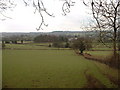
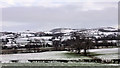
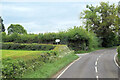
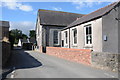
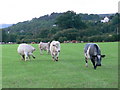
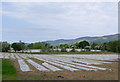
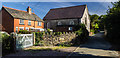
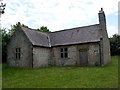
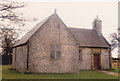
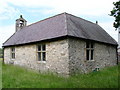
Area Information
Living in Llanfair Dyffryn Clwyd offers a distinctly rural experience within the Vale of Clwyd. This civil parish covers an area of 29.9 square kilometres and sits approximately one mile south of Ruthin. The village has deep historical roots, with a church site dating back to 1253/1254 and a current medieval parish church featuring double-nave construction from the 13th to the 15th century. Residents call it home while walking past veteran yew trees that are over 780 years old and near Grade II listed Eyarth Hall. The community is defined by its strong cultural heritage, with over half the population speaking Welsh as noted in 2011 census data that estimated the resident figure at around 1,258 people for 2024. Daily life centres around the historic landmark of the Church of St Mary and St Cynfarch, which includes a 14th-century knight monument and Victorian stained glass. You will find the local area lacks a current railway station, as Eyarth closed in 1951, meaning nearby Ruthin is the primary transport hub. Properties here rely on the LL15 postcode and the 01824 dialling code. The environment balances ancient forests with open countryside inside an Area of Outstanding Natural Beauty designation. You gain access to a setting where tribal lands and marcher lordships once dominated the landscape before the 1282 Conquest shaped the local estates.
- Area Type
- Unitary Electoral Division
- Area Size
- 29.9 km²
- Population
- Not available
- Population Density
- Not available
Demographics
The demographic profile of Llanfair Dyffryn Clwyd Community reflects a settled, older population. The median age in this parish is 70, indicating that residents primarily seek out retirement locations or established family homes rather than student accommodation. Data shows that total household composition dictates the social structure, with 75 per cent of residents owning their homes. This high ownership rate suggests a stable community where families have remained for generations or moved directly into owner-occupied stock. The provided figures do not distinguish between different accommodation types, but the high ownership percentage implies a significant portion of the housing stock consists of detached or semi-detached family dwellings rather than rental apartments. While specific data on predominant ethnic groups and religious affiliation is not included in the current dataset, the strong Welsh language presence characterises the cultural landscape. You will find that the age profile creates a quieter atmosphere, yet the presence of over half the community speaking Welsh ensures that traditional customs remain central to village life. The total population figure of roughly 1,258 people confirms this is a small, tight-knit village rather than a suburban expansion zone.
Household Size
Accommodation Type
Tenure
Ethnic Group
Religion
Household Composition
Age
Household Deprivation
NS-SEC
Explore more demographic insights in this area
Go to Demographics tabPlanning
Planning Constraints
- Flood RiskPremium
- Ramsar Wetland SitesPremium
- Area of Outstanding Natural BeautyPremium
- Protected Nature ReservePremium
- Protected WoodlandPremium
- Crime RiskPremium