Area Overview for Nelson Community
Photos of Nelson Community
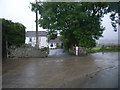
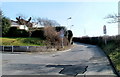
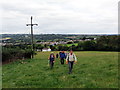
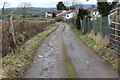
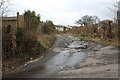
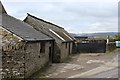
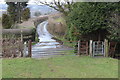
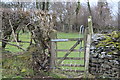
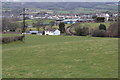
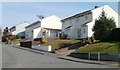
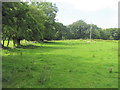
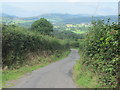
Area Information
Living in Nelson Community offers a quiet existence within a village that has deep historical roots. This unitary electoral division sits in South Wales, covering an area of 11.0 km². The location provides a distinct sense of place, situated five miles north of Caerphilly town and ten miles north of Cardiff. You are standing in the Taff Bargoed Valley, a setting defined by its transport history rather than modern sprawl. The community grew around Lord Nelson Inn, which stands today as a notable landmark. It originated as Ffos y Gerddinen, a name that hints at an agricultural past involving ditch or moat systems near rowan trees or mountain ashes. Your daily life here is shaped by the legacy of the coal mining industry and the Taff Vale Railway. The Taff Vale Railway opened a line to Dowlais by 1876, connecting the village to broader industrial networks. While modern transport now includes cycle tracks, the village retains its established character through ancient drovers' roads. You will find yourself near the Glamorganshire Canal, adding another layer to the local landscape. The presence of Llechwen Hall, a 17th-century country house, and the historic Llancaiach Fawr manor house provides a visual connection to the region's aristocratic history. King Charles I visited the manor house in 1645 during the English Civil War. A police station built in 1911 still serves as a reminder of the village's administrative development. This setting suits those who value proximity to history without the density of a large town.
- Area Type
- Parish
- Area Size
- 11.0 km²
- Population
- Not available
- Population Density
- Not available
Demographics
The population living in Nelson Community displays a very specific age profile centred on older residents. The median age for residents is 70, indicating that the neighbourhood is home to a largely senior demographic. Most households likely fit a pattern typical for this age group, suggesting a community where many retirees have settled. Seven out of every ten residents, or 74%, own their home outright. This high level of home ownership confirms that the area is primarily an established residential zone rather than a student or transient rental market. You are unlikely to encounter young professionals moving in on short-term contracts. When evaluating who lives here, the data presents figures for the total population without breaking down specific sub-groups. The most common age range classification provided in the source material simply denotes the total age demographic. This transparency highlights that the area lacks a significant younger workforce compared to newer suburban developments. The household composition data reflects a static population structure where families have long-term stability. Accommodation types are generalised in the available records, but the ownership rates imply a stock of detached, semi-detached, or older terraced properties suited for solo retirees or couples. The predominant ethnic group and religious affiliation are recorded as totals, meaning the immediate area does not feature stark demographic fragmentation. For someone wondering about the pace of life, the high home ownership percentage and median age suggest a community of long-term locals who are unlikely to sell quickly or be displaced by rapid development.
Household Size
Accommodation Type
Tenure
Ethnic Group
Religion
Household Composition
Age
Household Deprivation
NS-SEC
Explore more demographic insights in this area
Go to Demographics tabPlanning
Planning Constraints
- Flood RiskPremium
- Ramsar Wetland SitesPremium
- Area of Outstanding Natural BeautyPremium
- Protected Nature ReservePremium
- Protected WoodlandPremium
- Crime RiskPremium