Area Overview for Tweeddale East Ward
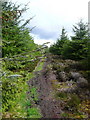
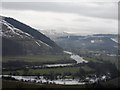
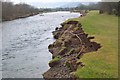
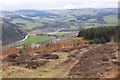
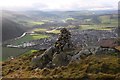
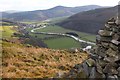
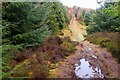
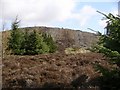
Photos of Tweeddale East Ward
Area Information
Living in Tweeddale East Ward offers a distinctly rural experience within Scotland. You are part of a district borough unitary ward that covers a substantial expanse of 275.5 square kilometres. This wide area encompasses open countryside and diverse local landscapes, defining the daily rhythm of life here. The wide footprint means travel distances vary significantly depending on your specific starting point and destination within the ward boundaries. Residents generally enjoy a quiet, spacious environment far removed from urban density. There are no statistics for the current population figure in the available records, so exact density numbers remain unknown. Instead, the character of the area is shaped by its government classification as a ward within a unitary authority structure. This administrative status influences local planning and service delivery. While the population count is absent from the data, the sheer size of 275.5 km² suggests a scattered settlement pattern typical of rural Scotland. Families and individuals here likely manage gardens, drive on country roads, and rely on established transport links to reach larger towns. Understanding the scale of this territory is key to appreciating the lifestyle. The area does not suffer from the high density pressures found in city centres, offering a different pace of life entirely. You are entering a region defined by significant land area and a specific geographical identity.
- Area Type
- District Borough Unitary Ward
- Area Size
- 275.5 km²
- Population
- Not available
- Population Density
- Not available
Demographics
The community profile of Tweeddale East Ward reflects the broader trends found in rural Scotland, though specific age breakdowns are not detailed in the current records. You cannot determine the exact mix of young families or retired residents from the available figures. Without population statistics, precise statements about household types or diversity remain impossible. The available data confirms a lack of information regarding income deprivation levels, meaning you cannot assess economic inequality within the ward. Home ownership percentages are also absent, so you do not know if buying is the norm or if renting dominates. The area's demographics are invisible in the provided dataset, creating a picture that relies on the known context of similar Scottish wards. Traditional rural communities often feature stable, long-term residency patterns. However, without concrete numbers, any suggestion about the dominance of single households or dual-income families is speculation. The absence of data on ethnicity or age distribution means you must rely on general knowledge of the region rather than local statistics. This lack of transparent demographic reporting suggests that detailed community analysis requires further local research. For a potential buyer, this means understanding that the social fabric is detailed but unquantified in the current sources. You are unaffected by specific deprivation scores because those metrics are not provided. The community identity exists independently of the missing statistical lines.
Household Size
Accommodation Type
Tenure
Ethnic Group
Religion
Household Composition
Age
Household Deprivation
NS-SEC
Explore more demographic insights in this area
Go to Demographics tabPlanning
Planning Constraints
- Flood RiskPremium
- Ramsar Wetland SitesPremium
- Area of Outstanding Natural BeautyPremium
- Protected Nature ReservePremium
- Protected WoodlandPremium
- Crime RiskPremium