Area Overview for PL1 1LR
Photos of PL1 1LR

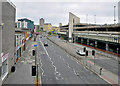
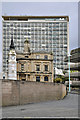
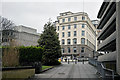
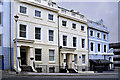

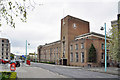
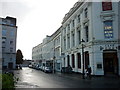
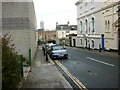

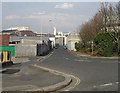
Area Information
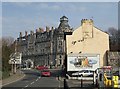
Living in PL1 1LR offers a distinct experience within Plymouth, defined by its compact residential scale. This specific postcode covers just 5,810 square metres, housing a population of 2,514 residents. The density here is extremely high, registering at 432,700 people per square kilometre. Such figures indicate a tightly packed environment where properties are closely situated. Daily life in this cluster is shaped by immediate proximity to major Plymouth transport hubs. You are close to Plymouth Railway Station, Devonport Railway Station, and several ferry terminals including the Plymouth Ferry Terminal. The area feels less like a traditional neighbourhood with wide streets and more like a concentrated housing estate. This density means you will rarely encounter large gardens or extensive open green spaces within the immediate boundaries of PL1 1LR. Instead, your world is defined by the immediate urban fabric. The small physical footprint creates a service-oriented lifestyle where access to shops and transit is prioritised over privacy or space. If you value convenience above all else, the sheer volume of nearby stations and retail outlets will suit your needs. However, if you require significant outdoor land or a quieter suburban setting, the intense concentration of housing within this tiny area may not align with your expectations.
- Area Type
- Postcode
- Area Size
- 5810 m²
- Population
- 2514
- Population Density
- 7946 people/km²
The property market in PL1 1LR is overwhelmingly characterised by rental demand rather than owner-occupier ownership. Data shows that merely 17% of the population own their homes, meaning 83% of residents are tenants. Consequently, the housing stock is primarily composed of flats and apartments. You should not expect to find many large family homes, as the predominant accommodation type is intrinsically linked to high-density living. This area functions as a micro-market for young professionals and students who prefer the convenience of city living over the responsibility of house ownership. When purchasing here, you are likely competing with landlords and institutional investors who seek high-yield rental properties. The small area size of 5,810 square metres ensures that supply is limited, creating a distinct dynamic where price is heavily dictated by proximity to the nearby railway and ferry stations. If you are an owner-occupier looking for security, this might feel like a step down from the communities where over 80% of residents own their homes. However, for those seeking an urban front door or a property to rent out, the flat-centric stock makes practical sense. Prices will reflect the proximity to Plymouth Railway Station and the Plymouth Ferry Terminal more than the quality of the immediate street.
House Prices in PL1 1LR
Showing 3 properties
| Address | Type | Beds | Baths | Last Sale Price | Last Sale Date | |
|---|---|---|---|---|---|---|
| 78 CORNWALL STREET, City Centre, Plymouth, PL1 1LR | Terraced | - | - | £168,000 | May 2015 | |
| The New Lanterns Restaurant, 88 Cornwall Street, City Centre, Plymouth, PL1 1LR | Retail | - | - | - | - | |
| 70 Cornwall Street, City Centre, Plymouth, PL1 1LR | shop | - | - | - | - |
Energy Efficiency in PL1 1LR
Your daily life in PL1 1LR is heavily influenced by the dense network of nearby amenities. You have access to five major retail outlets within practical reach, including Iceland Plymouth, Sainsburys Plymouth, and Tesco Plymouth New. This ensures you can stock up on groceries without needing a car. For travel, five rail stations are nearby, with Plymouth Railway Station offering the most comprehensive regional connections. Air travel is equally convenient, with two airports accessible: Plymouth City Airport and a second designation for the same facility, highlighting the importance of aviation access. You can also utilise the Plymouth Landing Stage, Plymouth Ferry Terminal, and Plymouth Mount Batten Ferry Landing to access cruise liners and inter-city ferries. This proximity to transit points means you can work from home digitally or hop on a train to London or Paris on a whim. Your lifestyle is urban and mobile, defined by the ease of reaching these major national brands and transport nodes rather than local parks or niche eateries.
Amenities
Schools
Families considering PL1 1LR face limited educational options within the immediate vicinity. The only primary school listed for this specific postcode is St Peter's CofE Primary School. This institution has an Ofsted rating of 'good', indicating a solid standard of education and management according to regulator assessments. It is a Church of England school, which may influence the moral ethos and governance structure of the education provided. Because this is a postcode dominated by young adults and flats, there are no secondary schools explicitly listed for PL1 1LR. Parents living here will almost certainly need to send their children to schools further away or rely on the single nearby primary option for younger children. The presence of a single 'good' rated primary school suggests that the local education cluster is basic rather than comprehensive. If you require a mix of primary and secondary institutions close by, this area falls short. The proximity to St Peter's CofE Primary School is the only concrete educational asset directly attached to this cluster.
| Rank | School | Type | Entry gender | Ages |
|---|
Explore more schools in this area
Go to Schools tabDemographics
The community in PL1 1LR is heavily skewed towards young adults, with a median age of just 22 years. In reality, this places the demographic profile firmly within the 15 to 29 age range. You can expect a population that is largely in their early to mid-twenties, reflecting a transient, student-heavy, or starter-worker environment. This is not a suburb for families with school-age children or retirees. Housing tenure reflects this demographic profile, as only 17% of residents own their homes outright. This implies that the vast majority of the population rents. The dominant accommodation type is flats, which statistically cannot support large families or offer traditional pitched roofs. You will find very few detached or semi-detached houses here compared to high-rise blocks or apartment complexes. While the predominant ethnic group is White, the social makeup is almost entirely defined by young adults seeking affordable, low-maintenance housing. For a buyer, this means you are entering a market dominated by investment properties, buy-to-lets, and students rather than owner-occupiers.
Household Size
Accommodation Type
Tenure
Ethnic Group
Religion
Household Composition
Age
Household Deprivation
NS-SEC
Explore more demographic insights in this area
Go to Demographics tabPlanning
Planning Constraints
- Flood RiskPremium
- Ramsar Wetland SitesPremium
- Area of Outstanding Natural BeautyPremium
- Protected Nature ReservePremium
- Protected WoodlandPremium