Area Overview for OX33 1DR
Photos of OX33 1DR
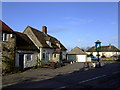
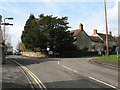

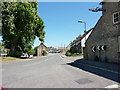
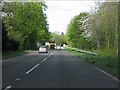
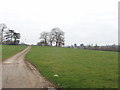
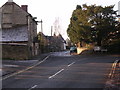
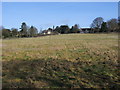
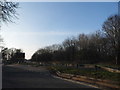

Area Information
Living in OX33 1DR offers a quiet, residential experience defined by its intimate scale and established character. This specific postcode covers a small cluster of homes designed for families and settled residents who value stability over rapid urban development. With a population of 1,492 people, the area maintains a density of 106 people per square kilometre. This figure suggests a settled community where neighbours likely know one another, rather than the transient crowds found in larger town centres. The built environment focuses on house-type accommodation, supporting a lifestyle centred around domestic life. Daily routines for residents are shaped by proximity to Wheatley, a nearby village that provides additional local services and acts as the immediate geographical backdrop. The area avoids major industrial zones or high-density housing corridors, meaning noise and pollution levels remain low. You will find a setting that prioritises space and tranquility. This makes the zone particularly suitable for those seeking homes in OX33 1DR without the chaos of a city centre commute. The small size of this specific residential cluster ensures that local councils and community groups can manage services efficiently. Every element of this location points toward a slow-paced, home-focused existence.
- Area Type
- Postcode
- Area Size
- Not available
- Population
- 1492
- Population Density
- 106 people/km²
The property market in OX33 1DR is characterised by a strong focus on owner-occupied residential housing. Houses constitute the primary accommodation type, confirming that the local estate is built for detached or semi-detached dwellings rather than flats or apartment blocks. The home ownership rate of 70 percent signals that the majority of transactions and investments are driven by people looking to settle down permanently. This contrasts sharply with areas near university campuses where rental yields and student landlords dominate the landscape. Buyers looking at these homes in OX33 1DR are entering a market where turnover is often slower compared to London or central Oxford. The low population density of 106 people per square kilometre means that supply is finite, likely constraining the number of available listings. Prospective buyers should expect to compete with other settled families rather than flippers or investors. The prevalence of houses suggests that land value plays a significant role in pricing, as gardens and outdoor spaces add substantial value. The area does not cater to the modern desire for urban living within five minutes of a train station. It is a market for those prioritising space and community over convenience and nightlife.
House Prices in OX33 1DR
No properties found in this postcode.
Energy Efficiency in OX33 1DR
Life in OX33 1DR revolves around practical access to retail and transit hubs rather than on-site entertainment or leisure facilities. Retail options are clustered near the co-op Wheatley and Spar supermarkets, alongside the Co-op Woodfarm outlet. These three major supermarkets within the immediate vicinity provide ample choice for groceries, household goods, and daily essentials. Residents do not need to travel far for basic shopping requirements. For commuting, two railway stations serve the community: the Islip Railway Station and the Oxford Parkway Railway Station. These stations offer direct links to central Oxford and the wider Thames Valley network. The availability of two stations provides redundancy, meaning if one service is delayed, the other remains viable. While the postcode itself is residential, the proximity to these transport nodes ensures that commuters face manageable journey times to employment centres. There are no listed gyms, cinemas, restaurants, or parks in the immediate amenity data. This confirms that the local lifestyle is utilitarian and transport-dependent. Daily life is structured around time spent in the grocery stores and train stations. This pragmatic approach suits the older demographic but may feel dull to those seeking evening social vibrancy.
Amenities
Schools
Education options are limited but accessible for families residing in OX33 1DR. The nearest educational institution is Wheatley Park School. This school operates as both a primary academy and a secondary academy, serving children throughout their compulsory education years. The dual status as an academy means it is directly funded by the Department for Education rather than the local council. This structure often allows the school to hire staff and manage its budget with greater flexibility than maintained schools. Because there is no secondary school listed separately for OX33 1DR, families must rely on Wheatley Park School for secondary education or consider attraction to schools further away. The proximity of a single academy suggests a self-contained educational cluster rather than a diverse mix of specialist primaries, secondaries, and grammar schools. Parents should note that the school's specific Ofsted ratings are not included in the current data, so independent research into recent inspection reports is essential before moving. The academy model may offer more specialised curriculum choices than traditional maintained schools. This concentration of schools in one location can simplify drop-offs but may also create traffic pressures during rush hours.
| Rank | School | Type | Entry gender | Ages |
|---|
Explore more schools in this area
Go to Schools tabDemographics
The community in OX33 1DR reflects a mature and settled society rather than a family nursery or student hub. The median age stands at 47 years, confirming that adults between 30 and 64 years form the most common age range. This demographic profile indicates that the residents are likely established in their careers and families, seeking long-term stability. Home ownership is the dominant housing tenure, with 70 percent of residents owning their property outright or with a mortgage. Such a high ownership rate typically correlates with lower crime rates and higher levels of community investment in local improvements. The predominant ethnic group is White, aligning with the broader South Oxfordshire demographic trends. The area consists almost entirely of houses, which suits this older, owner-occupied population better than high-rise flats. There is little evidence of a young professional rental labour force or a student presence. This stability creates a predictable environment where long-term planning is common. The population density of 106 people per square kilometre supports this observation, as it allows for sufficient green space between properties. The community feels exclusive by default due to the ownership model and age structure.
Household Size
Accommodation Type
Tenure
Ethnic Group
Religion
Household Composition
Age
Household Deprivation
NS-SEC
Explore more demographic insights in this area
Go to Demographics tabPlanning
Planning Constraints
- Flood RiskPremium
- Ramsar Wetland SitesPremium
- Area of Outstanding Natural BeautyPremium
- Protected Nature ReservePremium
- Protected WoodlandPremium