Area Overview for Northumberland
Photos of Northumberland
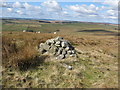
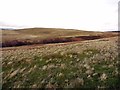
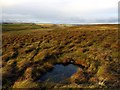
Area Information
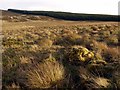
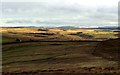
Living in Northumberland offers a life defined by dramatic landscapes and a strong rural identity. This ceremony county covers 5,081 km² of land stretching from the Cheviot Hills to the North Sea coast. You find yourself in the northernmost ceremonial county, England, bordering Scotland to the north and County Durham and Tyne and Wear to the south. The area is administratively managed by Northumberland County Council, with headquarters located in Morpeth. The terrain is predominantly rural and sparsely populated, featuring expansive moorland, coastal plains, dense woodlands, and the historic Hadrian's Wall. Historic market towns such as Hexham, Alnwick, and Berwick-upon-Tweed anchor daily life within this vast space. Your daily commute likely involves significant distances compared to urban centres, yet the single unitary authority structure ensures uniform governance across the region. The landscape remains largely unspoiled, reflecting an area that prioritises natural beauty over dense urban development. You are entering a region steeped in history, where the modern administrative boundaries align closely with traditional limits despite the loss of Newcastle-upon-Tyne in 1974. This setting provides a distinct environment for those seeking space and connection to nature.
- Area Type
- Ceremonial Counties Region
- Area Size
- 5081.0 km²
- Population
- Not available
- Population Density
- Not available
Demographics
The community profile in Northumberland reflects a mature population with a median age of 70 years. You are purchasing homes in an area where older residents form the demographic core. This age structure suggests a quiet, settled neighbourhood rather than a dynamic youth hub. Household composition data indicates a general total without specific breakdowns for families or singles, reinforcing the broad age profile. Home ownership stands at 66%, which is significantly higher than the UK average for many regions. This high rate means the housing stock is predominantly owned by residents rather than landlords. Accommodation types reflect this stability, with no specific rental-heavy concentrations apparent from the available figures. The predominant ethnic group and religious affiliations do not show specific breakdowns, pointing to a community where these demographics are standard or not the primary demographic marker. Deprivation data is not provided, so you must assess quality of life through other lenses like location and services. The high ownership rate suggests residents have long-term roots, creating a stable environment for those seeking to live in Northumberland. You are buying into a community where wealth and stability are typically tied to owning property outright.