Area Overview for Moorsholm
Photos of Moorsholm

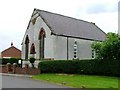
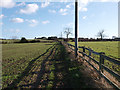
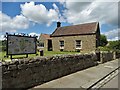
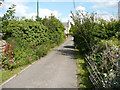
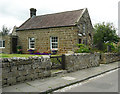

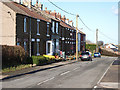

Area Information
Moorsholm functions as a built-up area covering 23.1 hectares within England. It represents a small but distinct residential settlement rather than a large urban centre. The scale of the place suggests a community with lower density compared to major cities, offering a more intimate living environment. Residents here experience daily life within a compact geographical boundary that fosters a sense of locality. The area's classification indicates it is part of a broader network of settlements, yet it maintains its own character as a self-contained neighbourhood. Anyone considering living in Moorsholm will find a setting defined by its modest size and established residential nature. The layout supports street-level interaction while keeping distances between homes relatively short. This physical scale influences how people navigate their surroundings and access local facilities. The demographic profile reveals a community with a median age of 70 years. This figure indicates a significant proportion of older residents compared to the national average. Such an age structure shapes the local economy, services, and social interactions within the area. Families with young children may find fewer age-matched peers in the immediate vicinity, whereas retirees will encounter neighbours with shared life experiences. The characteristic of having a high median age often correlates with stable neighbourhoods where long-term residents remain in their homes for extended periods. Potential buyers should recognise that the area caters primarily to those seeking a quiet retirement or a familiar environment suited to later life stages. Understanding this context helps frame expectations regarding local events, school-age footfall, and general community energy.
- Area Type
- Built Up Area 250
- Area Size
- 23.1 hectares
- Population
- Not available
- Population Density
- Not available
Daily life in Moorsholm relies on a network of nearby amenities that serve the local population. Residents within practical reach of these facilities do not need to travel far for essential shopping. Three notable railway stations provide access to wider transport networks: Commondale Railway Station, Castleton Moor Railway Station, and Danby Railway Station. These five rail connections in the vicinity offer various departure points for journeying to larger centres. The presence of multiple stations indicates that travel options exist, though the specific frequency and destinations depend on the individual ticket office or information kiosk usage. For daily shopping needs, residents have access to several retail outlets. Morrisons Daily, Co-op Loft, and Sainsburys in Skelton serve as the main retail points for groceries and household essentials. These five notable shops ensure that basic provision is a short drive or walk away. While specific dining venues or parks are not listed in the current data, the availability of these major supermarkets creates a convenient lifestyle for those who prefer non-local sourcing. The concentration of amenities around Moorsholm supports a self-sufficient habit where most errands can be completed without venturing into distant urban centres. This arrangement suits the older demographic well, providing accessible services without the complexity of navigating larger commercial districts. The layout of the area facilitates easy access to both transport hubs and retail stores, making it practical for independent living.
Amenities
Schools
| Rank | School | Type | Entry gender | Ages |
|---|
Explore more schools in this area
Go to Schools tabDemographics
The demographic landscape of Moorsholm is defined by a notably mature population. With a median age of 70 years, the community consists predominantly of older adults. This composition stands in contrast to areas with younger workforces or growing family populations. The majority of households likely contain either single individuals, couples in later life, or perhaps empty nesters. This age profile drives specific needs within the local infrastructure, such as healthcare access and leisure facilities suited to senior residents. Home ownership stands at 57% within Moorsholm. This percentage indicates that over half of the residents own their properties outright or have a mortgage, while the remaining 43% rent. The high proportion of owner-occupiers suggests financial stability among the established residents and a reluctance to move despite a growing age demographic. This stability contributes to a predictable living environment. Accommodation types are not explicitly detailed in the current dataset, but the ownership rate strongly implies a stock dominated by individual freehold properties rather than high-density social housing. While specific ethnic group or religion statistics are not available in the current records, the primary demographic descriptor remains the age structure. Deprivation metrics are also not provided, meaning the quality of life context relies on the observed age and ownership patterns. Buyers should anticipate a community where wealth distribution may be more uniform due to the retirement status of many occupants and the high level of property ownership.
Household Size
Accommodation Type
Tenure
Ethnic Group
Religion
Household Composition
Age
Household Deprivation
NS-SEC
Explore more demographic insights in this area
Go to Demographics tabPlanning
Planning Constraints
- Crime RiskPremium