Area Overview for Lilburn
Photos of Lilburn

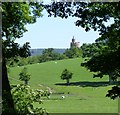

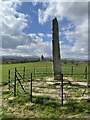
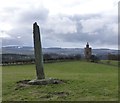
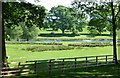
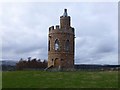

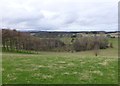
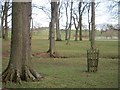
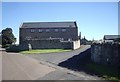
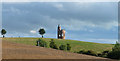
Area Information
Lilburn sits as a civil parish spanning 16.2 km² on the outskirts of London. You are looking at an established community where the number one priority for a stay is often security and peace. The area does not boast major population statistics or median age ranges in the data provided, which suggests a stable, perhaps older demographic. However, the safety profile tells a clear story. Residents benefit from a low crime risk score of 90 out of 100. This places Lilburn below the national average for crime rates, making it a comparatively secure neighbourhood. You can expect a quiet environment where property safety is a dominant concern for new arrivals. The parish status indicates a local governance structure focused on these rural-style concerns. Digital connectivity presents a more complex picture for modern living. While mobile coverage scores highly at 82 out of 100, fixed broadband quality lags behind at just 29 out of 100. This split between strong mobile signals and weak internet infrastructure suggests a community that relies heavily on physical presence rather than high-speed remote work. If you are considering **living in Lilburn**, the trade-off is clear between excellent security and mobile signal versus a slower domestic internet connection.
- Area Type
- Parish
- Area Size
- 16.2 km²
- Population
- Not available
- Population Density
- Not available
Demographics
The community within **Lilburn** reflects a settlement with specific generational characteristics, though the specific age breakdown is not detailed in the source information. You can observe a home ownership rate of 48 per cent, meaning nearly half of households own their property outright or with a mortgage. The other half likely comprises renters or shared ownership schemes. This balance indicates a mixed market where new buyers and existing residents coexist. Regarding household composition, religion, and predominant ethnic group, the data does not specify the exact figures. You must look to local records for those precise demographics as the text here only confirms these categories exist within the parish structure. The lack of specific age range data prevents a full picture of youth or elderly dependency, but the overall picture leans towards a settled community. Deprivation levels are not explicitly scored in the provided text, so you cannot make claims about economic hardship without citing missing information. Instead, focus on the tangible metrics available. The 48 per cent ownership figure is a solid anchor for **homes in Lilburn**. It shows that substantial portions of the residential stock are owner-occupied, which often correlates with long-term stability. While the material deprivation index is absent from the record, the low crime risk score suggests a well-maintained environment. You can infer that the 16.2 km² area supports a moderate population spread without the density pressures found in central urban zones.
Household Size
Accommodation Type
Tenure
Ethnic Group
Religion
Household Composition
Age
Household Deprivation
NS-SEC
Explore more demographic insights in this area
Go to Demographics tabPlanning
Planning Constraints
- Flood RiskPremium
- Ramsar Wetland SitesPremium
- Area of Outstanding Natural BeautyPremium
- Protected Nature ReservePremium
- Protected WoodlandPremium
- Crime RiskPremium