Area Overview for Coatham Mundeville
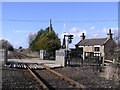
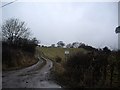
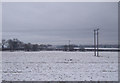
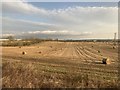
Photos of Coatham Mundeville


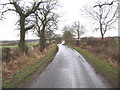
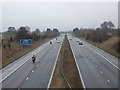
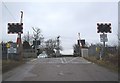

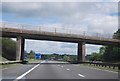

Area Information
Coatham Mundeville stands as a distinct civil parish in England, covering a compact area of exactly 7.0 km². Living in this parish offers a defined residential setting where you know the boundaries of your community clearly. The area functions as a self-contained locality rather than a sprawling urban zone, which shapes the daily rhythm for everyone who moves there. You will find a space that is intimate enough to feel personal yet organised enough to provide essential services. The administrative structure as a civil parish means there is local governance close to hand. This size allows for a manageable distance between homes and local amenities. Prospective buyers should note that the geography is constrained, so planning for expansion or new infrastructure is likely limited by the small land mass. The area is not a metropolis; it is a focused residential unit on the map of England. Your experience of Coatham Mundeville will be defined by this intimacy. You are not just buying a property in the East Riding; you are buying into a specific parish identity. The scale ensures that you can walk many parts of your neighbourhood if the housing stock supports it. The 7.0 km² footprint is the primary characteristic that separates Coatham Mundeville from larger districts. It creates a lived environment where the community boundaries are sharp and the sense of place is immediate.
- Area Type
- Parish
- Area Size
- 7.0 km²
- Population
- Not available
- Population Density
- Not available
Demographics
The community in Coatham Mundeville reflects a mature population profile with a median age of 70. This statistic indicates that older adults form the core of the demographic who call this parish their home. You are looking at an area where residents value stability and established local connections. The high median age suggests that coping with mobility issues or seeking quiet, low-activity neighbourhoods might be common priorities for current occupants. Household composition in Coatham Mundeville aligns with the broader age profile, favouring smaller households typical of retirement years. Most people here do not raise young families or navigate the complexities of multi-generational living under one roof. Home ownership is exceptionally strong, with 81% of households owning their properties. This figure reveals a community built by long-term residents who have stayed for decades rather than short-term tenants chasing the market. Such a high ownership rate often correlates with lower turnover and a desire to maintain the character of the area. You find an environment where people care deeply for the specific homes they purchased. The lack of data on specific ethnic groups indicates that the population is likely homogeneous or that detailed breakdowns are not recorded for this parish. Religion data is similarly absent, which is common for smaller parishes. The demographic picture is one of settled maturity. If you are considering moving here, expect to join a group of neighbours who are already deeply embedded in the fabric of Coatham Mundeville.
Household Size
Accommodation Type
Tenure
Ethnic Group
Religion
Household Composition
Age
Household Deprivation
NS-SEC
Explore more demographic insights in this area
Go to Demographics tabPlanning
Planning Constraints
- Flood RiskPremium
- Ramsar Wetland SitesPremium
- Area of Outstanding Natural BeautyPremium
- Protected Nature ReservePremium
- Protected WoodlandPremium
- Crime RiskPremium