Area Overview for William Morris Ward
Photos of William Morris Ward
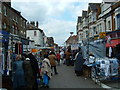

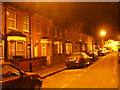
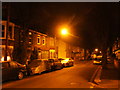

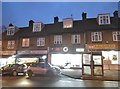


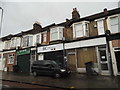

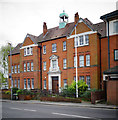
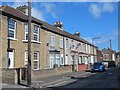
Area Information
Living in William Morris Ward offers a distinct experience defined by its compact footprint and established nature. This district borough unitary ward covers just 94.7 hectares, creating a dense residential environment rather than a sprawling suburban spread. With a population of 1907 people, the area maintains a specific demographic focus that differs significantly from surrounding towns. The community is characterised by an older resident base, reflecting a long-standing settlement where generations have settled. You will find households structured around stability rather than transient living, which shapes the local rhythm. The ward sits within England, contributing to the broader landscape of the county with a precise population density of 2013 people per square kilometre. This figure indicates a tightly knit neighbourhood where amenities are likely within immediate walking distance. Daily life here revolves around proximity to fellow residents within this small but defined geographic boundary. Homes in William Morris Ward sit within this concentrated area, meaning noise and activity from neighbours are ever-present features of everyday existence. The size of the ward ensures that you remain close to the core of community life without extensive travel. This concentration means the ward functions as a self-contained micro-urban environment where residents rely heavily on immediate surroundings for their daily needs. The physical scale of the ward dictates a pace of life that is inherently local and direct. The community profile in William Morris Ward is heavily weighted towards older residents. The median age stands at 70 years old, indicating that the majority of the population falls into the elderly demographic. This age structure suggests a quiet neighbourhood where services may cater specifically to retirement needs or health visitor proximity. Nearly all age data recorded falls under the total category, reinforcing the dominance of this older cohort across the ward. Home ownership sits at exactly 50% of households, meaning you are equally likely to find a private owner-occupied property or a rental unit. This split reflects a balanced market where both investors and lifetime tenants coexist within the same boundaries. Household composition data uses the total metric to describe these family and non-family units within the ward. Accommodation types are aggregated into a single total figure, though the high density of 2013 people per square kilometre suggests a mix of flats and bungalows common in mature wards. Ethnic and religious demographics are recorded as total figures, pointing to a homogenous population where no single minority group dominates the statistical breakouts. This homogeneity often correlates with specific cultural neighbourhoods that have organically developed over decades. Living in William Morris Ward means participating in a society where community organisations likely play a vital role due to the age of the residents. The low density of younger families influences local shop offerings and school catchment dynamics. The property market in William Morris Ward is fundamentally shaped by a 50% home ownership rate. This statistic divides the ward evenly between owner-occupied homes and rented properties, creating a hybrid market that differs from purely rental estates or exclusive freehold villages. You will encounter a range of accommodation types, as the ward aggregates its housing stock into a single total category for recording. With 1907 people spread across just 94.7 hectares, the shortage of land limits new builds and perpetuates existing housing stocks. This density of 2013 people per square kilometre ensures that any available homes in William Morris Ward command significant attention. The mix of owner-occupiers suggests a stable area where long-term residents maintain their property, while the rental segment offers entry points for those seeking alternatives to the high median age demographic. Buyers looking at William Morris Ward should note that the housing stock is not predominantly luxury or new construction, but rather established properties fitting a mature ward. The total accommodation count implies a variety of forms, possibly including terraced housing, maisonettes, or small semi-detached vectors typical of English unitary wards. A rental buyer might find competition higher than in other areas due to the limited supply within this small footprint. Conversely, an owner-buyer faces a market influenced by the 50% ownership baseline, suggesting moderate transaction volumes rather than a boom or bust scenario. The specific geography of England's local government structure influences these boundaries and property legality. Digital connectivity in William Morris Ward receives an excellent rating. Your fixed broadband quality score is 99 out of 100, which places the ward near the top of the performance spectrum. This score indicates that internet speeds are robust enough for heavy usage, streaming large video files, and simultaneous multiple-user connections without dropouts. Working from home is practically feasible for anyone residing here, given the reliability of the connection. Mobile data performance is likely adequate to support this high broadband baseline, ensuring that video calls remain clear even at street level. For residents relying on WAPIS or similar digital services, the ward provides a seamless online experience. A score of 99 means you do not need to compromise on digital entertainment or remote work tools while living in William Morris Ward. This level of connectivity is rare in areas with older infrastructure or poor landline coverage. You can expect instantaneous uploads and downloads, supporting the needs of modern households. The high score reflects a level of service that satisfies demanding technical requirements. This digital infrastructure complements the physical density of the ward, ensuring that even in a small area of 94.7 hectares, information flow is instantaneous. Residents can stream, game, or shop online with confidence, unburdened by dead zones or slow speeds. Safety and environmental factors present a mixed picture for those considering William Morris Ward. The ward passes all planning constraint assessments, meaning there are no Ramsar wetland sites, Areas of Outstanding Natural Beauty, protected nature reserves, or protected woodland within its boundaries. A flood risk assessment returns a score of 0, indicating low flood risk coverage and a safe environment regarding water levels. These clear passes suggest that planning permissions for development face few ecological hurdles, though this also means there is no designated high-value green space protection. The primary concern arises in the safety category. Crime risk registers a warning level with a score of 63 out of 100. This score indicates a medium crime risk where rates sit around the national average. You should standard security precautions are advisable for any home in William Morris Ward. While the absence of catastrophic environmental risks is reassuring, the crime statistic requires vigilance. Residents should expect to maintain normal locks and perhaps consider additional measures given the medium risk classification. The overall safety profile is defined by these two opposing forces: a secure physical environment regarding nature and flooding, paired with a statistical crime risk that matches broader national trends. Living in William Morris Ward requires an understanding that while the land is safe from flooding, the social environment demands standard urban awareness. What is the community feel like in William Morris Ward?The community is defined by an older resident base with a median age of 70. With only 1907 people spread across 94.7 hectares, the area feels tightly knit. The 50% home ownership rate indicates a mix of long-term owners and tenants, creating a stable but dynamic social fabric within this dense ward. How reliable is the internet for working from home?Residents can expect excellent digital connectivity. The fixed broadband quality score is 99 out of 100, providing near-perfect speeds for remote work, streaming, and heavy online usage. This high standard ensures that digital interruptions are rare for anyone living in William Morris Ward. Is the area safe from environmental risks like flooding?The flood risk coverage is low with a score of 0, ensuring properties are not in high-risk zones. Furthermore, there are no protected nature services or Ramsar sites. However, crime risk is rated as medium with a score of 63, so standard security advice applies to maintain safety. Who typically lives in William Morris Ward?The demographic profile shows a very high median age of 70 years. Total household composition data reflects this mature population. While 50% of residents own their homes, the total accommodation types suggest a ward built for retirement or older families seeking a close-knit environment.
- Area Type
- District Borough Unitary Ward
- Area Size
- 94.7 hectares
- Population
- 1907
- Population Density
- 2013 people/km²
Demographics
The community profile in William Morris Ward is heavily weighted towards older residents. The median age stands at 70 years old, indicating that the majority of the population falls into the elderly demographic. This age structure suggests a quiet neighbourhood where services may cater specifically to retirement needs or health visitor proximity. Nearly all age data recorded falls under the total category, reinforcing the dominance of this older cohort across the ward. Home ownership sits at exactly 50% of households, meaning you are equally likely to find a private owner-occupied property or a rental unit. This split reflects a balanced market where both investors and lifetime tenants coexist within the same boundaries. Household composition data uses the total metric to describe these family and non-family units within the ward. Accommodation types are aggregated into a single total figure, though the high density of 2013 people per square kilometre suggests a mix of flats and bungalows common in mature wards. Ethnic and religious demographics are recorded as total figures, pointing to a homogenous population where no single minority group dominates the statistical breakouts. This homogeneity often correlates with specific cultural neighbourhoods that have organically developed over decades. Living in William Morris Ward means participating in a society where community organisations likely play a vital role due to the age of the residents. The low density of younger families influences local shop offerings and school catchment dynamics. The property market in William Morris Ward is fundamentally shaped by a 50% home ownership rate. This statistic divides the ward evenly between owner-occupied homes and rented properties, creating a hybrid market that differs from purely rental estates or exclusive freehold villages. You will encounter a range of accommodation types, as the ward aggregates its housing stock into a single total category for recording. With 1907 people spread across just 94.7 hectares, the shortage of land limits new builds and perpetuates existing housing stocks. This density of 2013 people per square kilometre ensures that any available homes in William Morris Ward command significant attention. The mix of owner-occupiers suggests a stable area where long-term residents maintain their property, while the rental segment offers entry points for those seeking alternatives to the high median age demographic. Buyers looking at William Morris Ward should note that the housing stock is not predominantly luxury or new construction, but rather established properties fitting a mature ward. The total accommodation count implies a variety of forms, possibly including terraced housing, maisonettes, or small semi-detached vectors typical of English unitary wards. A rental buyer might find competition higher than in other areas due to the limited supply within this small footprint. Conversely, an owner-buyer faces a market influenced by the 50% ownership baseline, suggesting moderate transaction volumes rather than a boom or bust scenario. The specific geography of England's local government structure influences these boundaries and property legality. Digital connectivity in William Morris Ward receives an excellent rating. Your fixed broadband quality score is 99 out of 100, which places the ward near the top of the performance spectrum. This score indicates that internet speeds are robust enough for heavy usage, streaming large video files, and simultaneous multiple-user connections without dropouts. Working from home is practically feasible for anyone residing here, given the reliability of the connection. Mobile data performance is likely adequate to support this high broadband baseline, ensuring that video calls remain clear even at street level. For residents relying on WAPIS or similar digital services, the ward provides a seamless online experience. A score of 99 means you do not need to compromise on digital entertainment or remote work tools while living in William Morris Ward. This level of connectivity is rare in areas with older infrastructure or poor landline coverage. You can expect instantaneous uploads and downloads, supporting the needs of modern households. The high score reflects a level of service that satisfies demanding technical requirements. This digital infrastructure complements the physical density of the ward, ensuring that even in a small area of 94.7 hectares, information flow is instantaneous. Residents can stream, game, or shop online with confidence, unburdened by dead zones or slow speeds. Safety and environmental factors present a mixed picture for those considering William Morris Ward. The ward passes all planning constraint assessments, meaning there are no Ramsar wetland sites, Areas of Outstanding Natural Beauty, protected nature reserves, or protected woodland within its boundaries. A flood risk assessment returns a score of 0, indicating low flood risk coverage and a safe environment regarding water levels. These clear passes suggest that planning permissions for development face few ecological hurdles, though this also means there is no designated high-value green space protection. The primary concern arises in the safety category. Crime risk registers a warning level with a score of 63 out of 100. This score indicates a medium crime risk where rates sit around the national average. You should standard security precautions are advisable for any home in William Morris Ward. While the absence of catastrophic environmental risks is reassuring, the crime statistic requires vigilance. Residents should expect to maintain normal locks and perhaps consider additional measures given the medium risk classification. The overall safety profile is defined by these two opposing forces: a secure physical environment regarding nature and flooding, paired with a statistical crime risk that matches broader national trends. Living in William Morris Ward requires an understanding that while the land is safe from flooding, the social environment demands standard urban awareness. What is the community feel like in William Morris Ward?The community is defined by an older resident base with a median age of 70. With only 1907 people spread across 94.7 hectares, the area feels tightly knit. The 50% home ownership rate indicates a mix of long-term owners and tenants, creating a stable but dynamic social fabric within this dense ward. How reliable is the internet for working from home?Residents can expect excellent digital connectivity. The fixed broadband quality score is 99 out of 100, providing near-perfect speeds for remote work, streaming, and heavy online usage. This high standard ensures that digital interruptions are rare for anyone living in William Morris Ward. Is the area safe from environmental risks like flooding?The flood risk coverage is low with a score of 0, ensuring properties are not in high-risk zones. Furthermore, there are no protected nature services or Ramsar sites. However, crime risk is rated as medium with a score of 63, so standard security advice applies to maintain safety. Who typically lives in William Morris Ward?The demographic profile shows a very high median age of 70 years. Total household composition data reflects this mature population. While 50% of residents own their homes, the total accommodation types suggest a ward built for retirement or older families seeking a close-knit environment.
Household Size
Accommodation Type
Tenure
Ethnic Group
Religion
Household Composition
Age
Household Deprivation
NS-SEC
Explore more demographic insights in this area
Go to Demographics tabPlanning
Planning Constraints
- Flood RiskPremium
- Ramsar Wetland SitesPremium
- Area of Outstanding Natural BeautyPremium
- Protected Nature ReservePremium
- Protected WoodlandPremium
- Crime RiskPremium