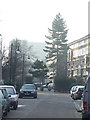
Area Overview for Faraday Ward

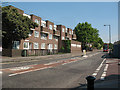
Damilola Taylor Centre, East Surrey Grove, Camberwell. in Faraday Ward
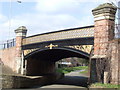
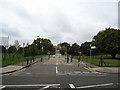
Burgess Park, canal footbridge in Faraday Ward
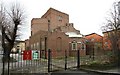
St Luke, Pentridge Street, London SE15 in Faraday Ward
Canal bridge, Willowbrook Road in Faraday Ward
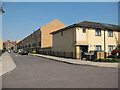
Lynbrook Grove, Peckham in Faraday Ward
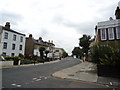
Trafalgar Avenue, Peckham in Faraday Ward
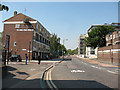
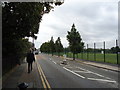
Willowbrook Road, Peckham in Faraday Ward
Christ Apostolic Church, Peckham in Faraday Ward
Waite Street, London SE15 in Faraday Ward
Trafalgar Avenue, London SE15 in Faraday Ward
Glengall Road, London SE15 in Faraday Ward
January sunlight in Peckham in Faraday Ward
100 photos from this area

Area Information

Living in Faraday Ward offers a defined urban experience within the London Borough of Southwark. This electoral ward covers a compact area of only 1.1 km² yet holds a population of 5,546 residents. The density stands at 5,034 people per square kilometre, which gives daily life a concentrated, central London feel. You will find yourself situated near the Walworth neighbourhood, with coordinates placing the ward approximately 51.48° N and 0.09° W. The area sits south-east of Charing Cross and borders significant housing developments such as the Aylesbury Estate and East Walworth. Historical boundaries have shifted multiple times since the ward's creation in 1965, including a major transfer of land from Lambeth in 1993. Notable local landmarks include Aycliffe House, a historic apartment building known as Attached Railings, and the former Heygate Estate, which stood until its demolition between 2011 and 2014. Lime Kiln within Burgess Park is another historic feature nearby. Prospective buyers who want to understand the scale and history of this Southwark district will find Faraday Ward to be a distinct, compact entity shaped by decades of urban planning and boundary revisions.

Area Type
District Borough Unitary Ward
Area Size
1.1 km²
Population
5546
Population Density
5034 people/km²

Demographics

The community in Faraday Ward has a distinct age profile, centred around a median age of 70. This indicates an older resident population compared to many other parts of the country. The demographic mix is heavily weighted toward this older age group, shaping the social needs and daily rhythms of the ward. Only 17% of homes in the area are owner-occupied, which is a markedly low figure for London. This statistic signals that the vast majority of residents rely on the private rental market rather than owning their property. The data does not specify the breakdown of household composition or ethnic diversity percentages, but the dominance of renting and the older population define the current social fabric. With a population density exceeding 5,000 people per square kilometre, the area supports a large number of households in a small footprint. You should anticipate a community where rental agreements are common and where the average resident is likely well into retirement age. The accommodation types are not individually detailed in the available records, but the overall ownership rate strongly suggests a landscape dominated by assured shorthold tenancies or long-assured tenancies typical of Southwark. Understanding these demographics helps you gauge the neighbours and the pace of community life in this Southwark ward.

Household Size

total
most common

Accommodation Type

total
most common

Tenure

17
majority

Ethnic Group

total
most common

Religion

total
most common

Household Composition

total
most common

Age

70
median
Age: Total
most common

Household Deprivation

N/A
with no deprivation

NS-SEC

29
in Lower managerial occupations

Explore more demographic insights in this area

Go to Demographics tab

Planning

Planning Constraints

  • Flood Risk
    Premium
  • Ramsar Wetland Sites
    Premium
  • Area of Outstanding Natural Beauty
    Premium
  • Protected Nature Reserve
    Premium
  • Protected Woodland
    Premium
  • Crime Risk
    Premium

Explore more planning insights in this area

Open Planning map

Frequently Asked Questions

How is the community feel and who mainly lives in Faraday Ward?
Residents in Faraday Ward have a median age of 70, indicating a predominantly older population. The area is home to 5,546 people living in a dense, rented environment where only 17% of homes are owner-occupied. This profile suggests a community accustomed to urban living with a focus on retirement and rental housing arrangements rather than family home ownership or youth populations.
What is the transport and digital connectivity like for residents?
Digital connectivity in Faraday Ward is excellent, with a fixed broadband score of 92 out of 100. This high rating means reliable, fast internet suitable for working from home and high-bandwidth tasks. You can expect strong online access across this 1.1 km² area, removing common frustrations with slow speeds. Mobile connectivity is not separately scored but complements the superior fixed broadband infrastructure typical of high-density London wards.
Is it safe to live in Faraday Ward considering crime and environmental risks?
Safety presents specific challenges in Faraday Ward. The crime risk is marked as WARNING with a score of 43, indicating average crime rates that require standard precautions. More critically, the flood risk is assessed as CRITICAL with a score of 96.65, highlighting significant potential for flooding. While there are no protected nature reserves or woodland constraints, you must weigh the average crime statistics and serious flood vulnerability against the area's benefits. Standard security measures and flood insurance are advisable for prospective residents.
Are there any major planning restrictions or historical sites in the area?
The ward contains several notable features including the Aylesbury Estate and the historic Attached Railings apartment building. However, testing shows zero coverage for restricted areas such as Ramsar sites, Areas of Outstanding Natural Beauty, or protected woodlands. This absence of planning constraints means development is less likely to be blocked by strict environmental designations. The area is firmly within an urban setting without the heritage overlays that often slow building projects in Greater London.

We use cookies to provide you with the best experience. By continuing, you agree to our Cookie Policy .