Area Overview for Plumstead
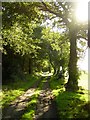
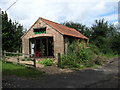
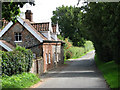
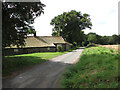
Photos of Plumstead
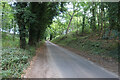
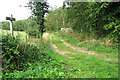
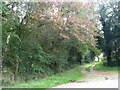
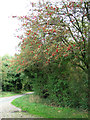
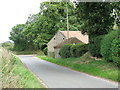
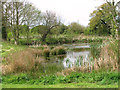
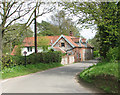
Area Information
Plumstead is a district within the Royal Borough of Greenwich, covering an area of 5.2 km². The name derives from Old English, reflecting its historical connection to fruit cultivation as a place where plum trees grow. Geographically, it sits between Woolwich and Erith on a riverside parish. The topography features a flat riverfront strip, a steep slope leading to a narrow plateau of common land, and another ascent to Shooters Hill. Plumstead traces its recorded history back to AD 960, when it was owned by the Abbot and monks of St Augustine at Canterbury. It was subsequently mentioned in the Domesday Book of 1086. For centuries, the area remained a rural parish with approximately 1,000 inhabitants who subsisted primarily on fishing and agriculture. The area's transformation began in the 19th century, inextricably linked to the expansion of the Royal Arsenal in neighbouring Woolwich. Development occurred in distinct phases during the 1850s and 1860s, which saw Burrage New Town and the Herbert Estate built as up-market residential areas for Arsenal managers, scientists, and military officers. Plumstead's population tripled from 8,000 to 28,000 between 1851 and 1871. Subsequent developments housed semi-skilled and manual workers, including the Bostall or Coop estate built by the Royal Arsenal Cooperative Society between 1900 and 1914. By 1914, most available land had been developed. Today, Plumstead is a diverse and vibrant suburban community characterized by its working-class heritage. Residents and the broader community have demonstrated strong attachment to local spaces, notably in 1876 when the Commons' Protection League successfully resisted attempts by Queen's College, Oxford to develop Plumstead Common.
- Area Type
- Parish
- Area Size
- 5.2 km²
- Population
- Not available
- Population Density
- Not available
Demographics
The community in Plumstead has a median age of 70. This demographic profile suggests a population where older residents form a significant portion of the在册 inhabitants. The most common age range recorded is simply listed as Age: Total, indicating a broad spread across all demographics. Home ownership levels in the area stand at 70 percent. This figure indicates a established community where the majority of residences are in the hands of proprietors rather than tenants. Household composition data is recorded as total, providing a baseline for understanding family structures within the district. Accommodation type statistics are also recorded as total, reflecting the comprehensive nature of the housing stock survey. Predominant ethnic group statistics are recorded as total, offering a complete picture of the area's diversity without isolating specific segments. Religion statistics are similarly recorded as total, encompassing the full spectrum of faiths present. While specific deprivation data is not explicitly detailed in the current dataset, the high home ownership rate of 70 percent often correlates with areas of stability. The low median age compared to some national averages, although skewed here by a high median of 70, suggests a settlement that may appeal to those seeking settled communities. Living in Plumstead involves navigating a community defined by these clear demographic markers. Homes in Plumstead are predominantly owner-occupied, which can influence local investment and community engagement.
Household Size
Accommodation Type
Tenure
Ethnic Group
Religion
Household Composition
Age
Household Deprivation
NS-SEC
Explore more demographic insights in this area
Go to Demographics tabPlanning
Planning Constraints
- Flood RiskPremium
- Ramsar Wetland SitesPremium
- Area of Outstanding Natural BeautyPremium
- Protected Nature ReservePremium
- Protected WoodlandPremium