Area Overview for Cambridgeshire
Photos of Cambridgeshire
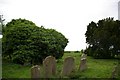


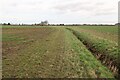
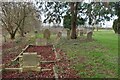
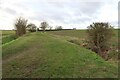


Area Information
Cambridgeshire stands as a ceremonial county in eastern England, encompassing the administrative county alongside the unitary authority of Peterborough. You are looking at a region that covers approximately 3,398.4 square kilometres, making it a significant area for those considering a move to east of England. The geographic heart of this territory sits near the coordinates 52.367167, 0.004326, which places close to the centre of Cambridge, the designated county town. This area has a deep history as an edge of the Danelaw where Danes and Saxons contested land from the 9th to the 11th centuries. Administrative jointure with Huntingdonshire lasted through the Middle Ages before the modern administrative county formed in 1974 to incorporate most of historic Huntingdonshire. Daily life here revolves around intellectual centres established centuries ago, such as the University of Cambridge, which was founded in the 13th century. Fen drainage projects reached completion by the mid-17th century, transforming the landscape into the terrain you see today. You will find key landmarks including the splendid cathedral of Ely alongside historic University of Cambridge buildings. Living in Cambridgeshire means residing in an area defined by these academic and religious institutions rather than modern commercial hubs. The region serves as a blend of historic heritage and administrative function, offering a distinct character compared to neighbouring counties. Your home search here focuses on established locations with centuries of history underpinning modern neighbourhoods.
- Area Type
- Ceremonial Counties Region
- Area Size
- 3398.4 km²
- Population
- Not available
- Population Density
- Not available
Demographics
The community within Cambridgeshire reflects a settled population with an average age of 70 years. This median age indicates a demographic skewed heavily toward older residents compared to national averages. When you search for homes in Cambridgeshire, you are likely entering an area where the most common age group spans the full spectrum, recorded simply as Age: Total in available records. Home ownership stands at 63 per cent, placing this region firmly in the owner-occupier bracket. This figure suggests that buyers rather than landlords dominate the residential scene, creating a market where property transactions often involve established homeowners disposing of assets. The household composition and household types remain recorded as total, indicating a diverse mix of living arrangements from single occupants to multi-generational families. Accommodation types are similarly catalogued as total, meaning no single building style overwhelmingly dominates the landscape across the entire 3,398.4 square kilometre expanse. Ethnic groups and predominant religious affiliations are recorded as total, showing that no single identity defines the social fabric across the ceremonial county. This lack of specific breakdowns for ethnicity means the area likely comprises a standard mix for eastern England without standout minority concentrations. Your understanding of the community relies on these aggregate figures showing a mature, predominantly owning population spread across a vast geographical footprint.