Area Overview for Belaugh
Photos of Belaugh
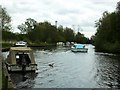
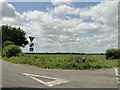
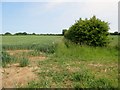
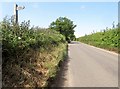
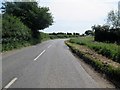
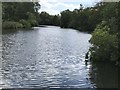
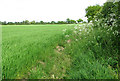
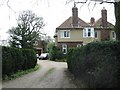
Area Information
Belaugh is a small civil parish covering just 3.6 square kilometres in England. This limited geographical footprint means the landscape is intimate, with every plot of land defined within the parish boundaries. Living in Belaugh reveals a stark reality for prospective buyers: the space available is finite, which naturally limits the volume of new homes arising. The area functions as a distinct local community where daily life revolves around the immediate surroundings rather than distant urban centres. There are no large commercial hubs or major employment sites within these borders, meaning residents rely heavily on a wider context for employment and substantial shopping. The physical size of the parish suggests a quiet, perhaps isolated, existence where the natural environment holds more sway than infrastructure. You will find a neighbourhood defined by its constraints rather than its connections to a broader network. The sheer compactness of 3.6 km² means there is no room for expansion, shaping the character of every street and field. This is an area where you buy into a fixed location where land values and availability are dictated by the village's fixed perimeter.
- Area Type
- Parish
- Area Size
- 3.6 km²
- Population
- Not available
- Population Density
- Not available
Demographics
The community in Belaugh has a clearly defined age profile, with a median age of 70 years. This figure indicates a population dominated by older residents, suggesting a retirement demographic rather than families with young children. The most common age range extends across the total population, reinforcing that this is not a mixed-age neighbourhood but one where seniors form the core of the social structure. With this demographic composition, you should expect a slow-paced environment where those over the retirement age are the primary neighbours. Statistics show that 79 per cent of residents own their homes outright. This high level of home ownership points to a stable, settled community where people do not move frequently. The total household composition reflects these aging residents, and accommodation types align with this long-term tenure. There are no signs of a transient population or significant youth inflow. The demographic data paints a picture of a quiet settlement where the workforce left long ago. When considering homes in Belaugh, remember that you are entering a domain where the residents have likely lived there for decades, if not a lifetime. The lack of young families is evident in the absence of school-age data or young adult clusters.
Household Size
Accommodation Type
Tenure
Ethnic Group
Religion
Household Composition
Age
Household Deprivation
NS-SEC
Explore more demographic insights in this area
Go to Demographics tabPlanning
Planning Constraints
- Flood RiskPremium
- Ramsar Wetland SitesPremium
- Area of Outstanding Natural BeautyPremium
- Protected Nature ReservePremium
- Protected WoodlandPremium
- Crime RiskPremium