Area Overview for Flagg
Photos of Flagg
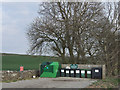
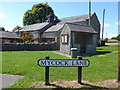
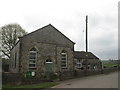
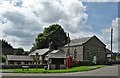
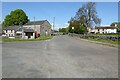
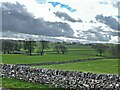
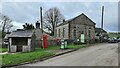
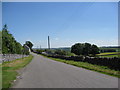
Area Information
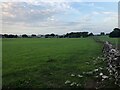
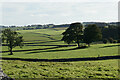
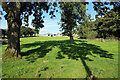
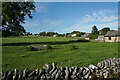
Living in Flagg offers a quiet existence within a civil parish that covers 7.3 km². This small area provides a defined neighbourhood where residents enjoy low-density surroundings without the constraints of complex planning restrictions. You will find no Ramsar wetland sites, no Areas of Outstanding Natural Beauty, and no protected woodlands within the parish boundaries. These clear status means development constraints are minimal compared to more sensitive rural locations. The settlement functions as a distinct community where daily life revolves around local familiarity rather than transit-heavy commuting. You can expect a peaceful environment where the primary focus remains on the immediate neighbourhood rather than distant urban centres. The area size of 7.3 km² ensures that distances are manageable for anyone dependent on a personal vehicle. Residents value this spatial clarity as it defines the limits of their everyday world. There are no hidden complexities regarding protected nature reserves or flood risks to complicate your understanding of the land. The parish stands as a straightforward residential option where the landscape remains open and exposed to the elements without significant environmental buffers. This simplicity allows you to understand exactly what you own and how it fits into the wider rural fabric of England.
- Area Type
- Parish
- Area Size
- 7.3 km²
- Population
- Not available
- Population Density
- Not available
Demographics
The community in Flagg displays a distinctly mature profile with a median age of 70 years old. You are likely to encounter an older population where age is the dominant demographic marker. Household composition reflects this stability with a heavy weighting towards established residents who have remained in the area for decades. Ownership of property stands at 79%, indicating that the vast majority of homes in Flagg are owner-occupied rather than rented. This high rate of ownership suggests a settled community where long-term residents hold a significant stake in the local estate. Accommodation types show a pattern consistent with an ageing population favouring single-storey or bungalow styles suitable for retirees. You will find that most families have already moved on, leaving a legacy of permanent residents who know every road and local landmark. The ethnic diversity is not detailed in current records, but the social fabric appears tightly knit around shared history rather than recent migration. Religion data is similarly absent, yet the daily rhythm of life remains predictable and routine. This demographic structure creates a neighbourhood where neighbours know each other personally and where decisions are made slowly over generations.
Household Size
Accommodation Type
Tenure
Ethnic Group
Religion
Household Composition
Age
Household Deprivation
NS-SEC
Explore more demographic insights in this area
Go to Demographics tabPlanning
Planning Constraints
- Flood RiskLocked
- Ramsar Wetland SitesLocked
- Area of Outstanding Natural BeautyLocked
- Protected Nature ReserveLocked
- Protected WoodlandLocked
- Crime RiskLocked